You lace up your running shoes, start jogging, and check your watch. It shows 14 minutes per mile. Suddenly, you wonder whether you're running too slowly. Meanwhile, someone passes you at a much faster pace, and keeping up seems impossible. When you try to match their speed, your breathing becomes heavy and your legs tire before the workout ends. Instead of feeling proud of your effort, you begin questioning whether your pace is good enough.
Understanding what is a good running pace for beginners can help you avoid this frustration. A suitable pace isn't simply the fastest speed you can reach. It's an effort you can manage, repeat, and gradually improve as your fitness develops. This guide explains beginner pace examples, how to measure your speed, ways to find a comfortable running effort, and when it makes sense to run faster.
Key Takeaways
What Does Running Pace Mean?
Running pace measures how much time you take to cover a certain distance.
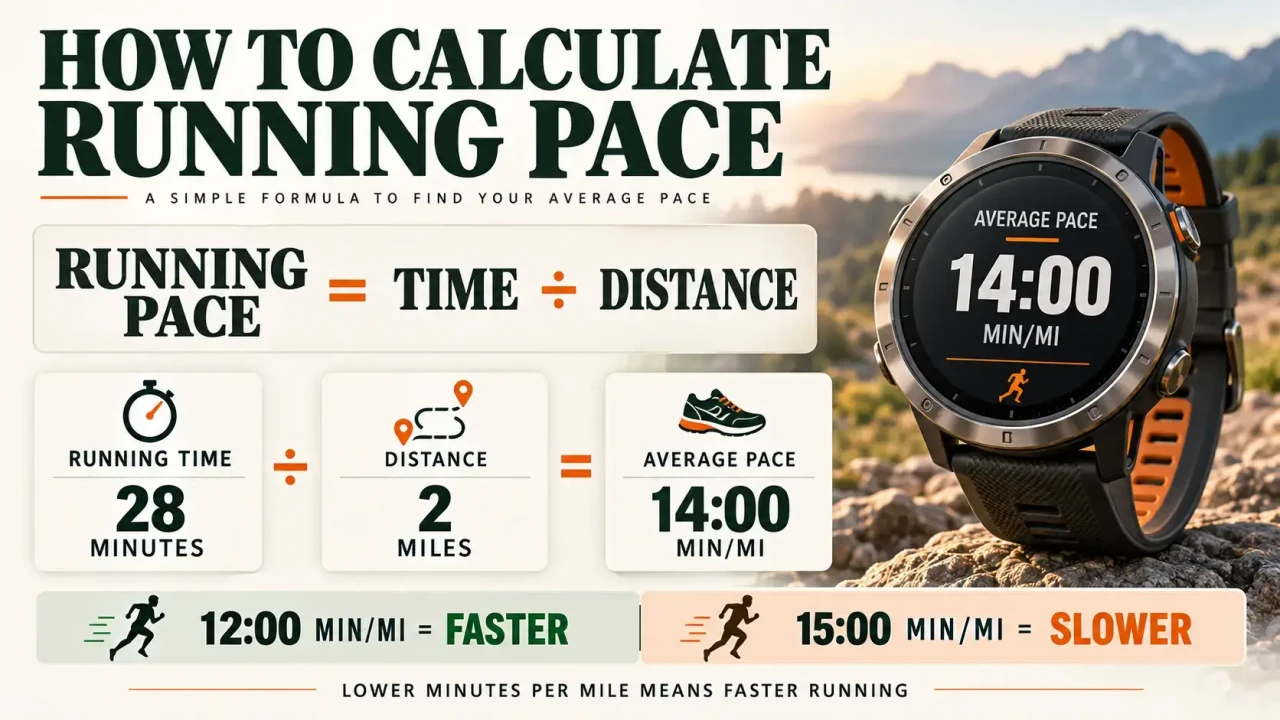
In the United States, runners commonly measure pace in minutes per mile, written as min/mi.
For example, a 12:00-minute pace means completing one mile in 12 minutes.
A 15:00-minute pace means covering the same distance in 15 minutes.
Therefore, a lower time per mile indicates faster running.
Pace isn't the same as speed. Although both describe movement, pace measures time per distance, while speed measures distance per time.
A runner traveling at five miles per hour completes one mile in 12 minutes.
Understanding this distinction makes running watches, fitness apps, and training plans easier to use.
How to Calculate Your Running Pace
The calculation is simple:
Running pace = Total running time ÷ Distance covered
Suppose you run two miles in 28 minutes.
Divide 28 by two.
Your average running pace is 14 minutes per mile.
Now imagine another workout takes 39 minutes to cover three miles.
Dividing 39 by three gives an average pace of 13 minutes per mile.
These calculations work when the time and distance are measured accurately.
If your watch includes walking breaks, the reported pace may represent your entire workout rather than your jogging sections alone.
That difference matters when comparing sessions.
Beginner Running Pace Examples
What Is an Average Running Pace for Beginners?
Many people want to know the average running pace before starting their first training program.
However, this question is more difficult than it appears.
A beginner may be someone completing their first jog, a previously active person trying running for the first time, or a returning runner who has not trained in years.
Their physical abilities can differ considerably.
Consequently, a single average cannot represent everyone accurately.
Some beginner-running guides use ranges such as 12–15 minutes per mile to illustrate a relaxed jogging pace.
Yet other beginners may move more slowly, especially during their first workouts.
A runner who averages 17 minutes per mile is not automatically training incorrectly.
The more important question is whether that pace suits the intended effort and can be maintained comfortably.
Why Race Averages Can Be Misleading
Online pace comparisons often use times recorded during organized races.
However, race results don't represent every person who has recently started running.
People who enter races may already have training experience or a higher level of fitness than complete beginners.
In addition, a race is usually performed at a harder effort than an ordinary easy run.
Comparing your comfortable training pace with someone else's race pace isn't an equal comparison.
For example, a person might race a 5K at a faster speed than they normally use for easy sessions.
That doesn't mean their slower training pace is poor.
Practical tip: Treat race statistics as performance data, not as a minimum standard for your everyday running.
Does Age Affect a Good Running Pace?
Age can influence physical performance, but it isn't the only factor.
Training history, fitness, health, recovery, and activity level also matter.
A physically active older beginner might run more comfortably than a younger person with little exercise experience.
Similarly, two runners of the same age may have different abilities.
Therefore, avoid selecting your pace using age alone.
Start with the effort you can manage and adjust as your running experience increases.
How to Find Your Ideal Beginner Running Pace
The best starting pace is usually one you can maintain without turning an ordinary workout into an all-out effort.
Instead of choosing a number from a chart, use the following process to identify a practical starting point.
1. Begin With a Comfortable Warm-Up
Start with several minutes of easy walking.
This allows you to move gradually from rest into activity.
Afterward, begin jogging at a relaxed effort.
Avoid accelerating immediately to the pace displayed on a watch or fitness app.
Your breathing may naturally increase when you begin running, but you shouldn't feel the need to sprint.
During the first few minutes, check whether the effort is comfortable enough to continue.
If the session feels difficult almost immediately, slow down.
A walking break may also be useful.
2. Use the Talk Test to Check Your Effort
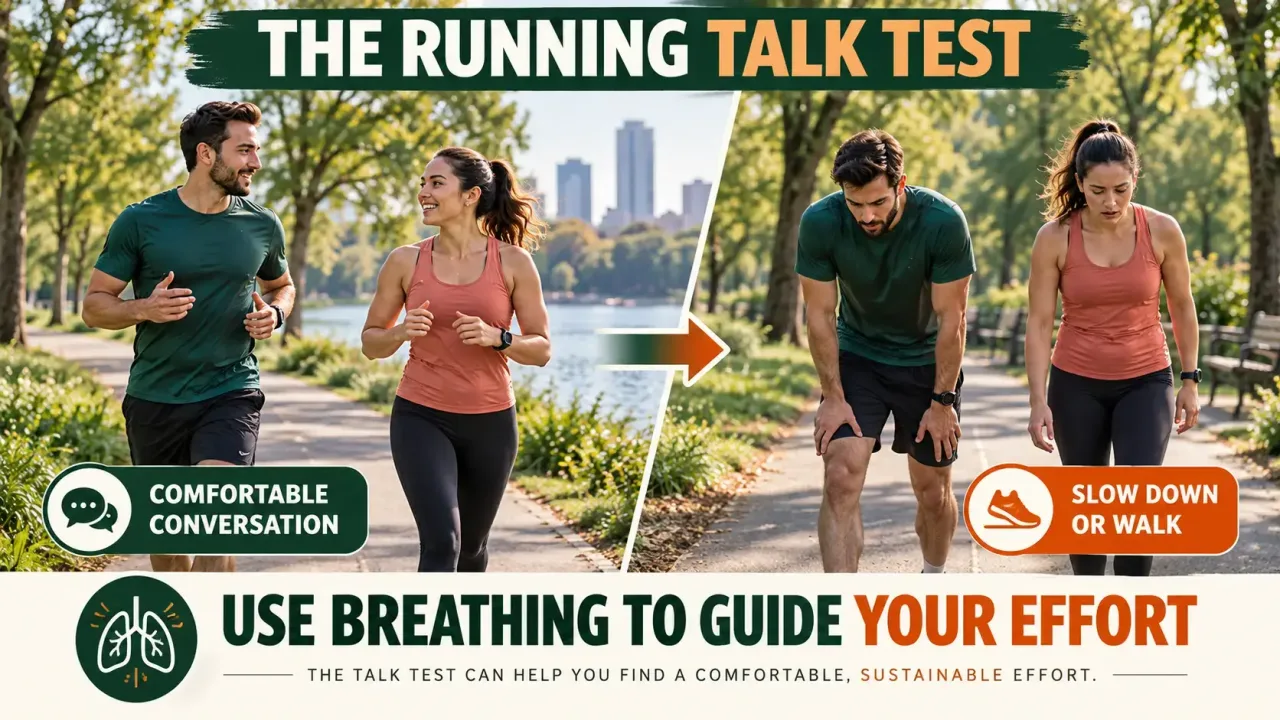
The talk test is a simple way to understand exercise intensity.
According to the CDC's official guide to measuring physical activity intensity, people doing moderate-intensity aerobic activity can generally talk but not sing. During vigorous activity, saying more than a few words without stopping for breath becomes difficult.
Jogging or running is often classified as vigorous activity. However, relative intensity depends on the person's fitness.
For a beginner, even slow jogging may feel demanding.
During an easy workout, aim for an effort that feels reasonably comfortable. If speaking a short sentence becomes difficult, slow down or walk.
The talk test is a guide, not a medical assessment.
Practical tip: Check your breathing after a few minutes of jogging. If the effort already feels difficult, make an adjustment before fatigue becomes overwhelming.
3. Pay Attention to Perceived Effort
Your breathing is useful, but it isn't the only way to judge a workout.
Perceived effort describes how hard an activity feels.
Imagine a simple scale from zero to ten.
Zero means rest. Ten represents your greatest possible effort.
A comfortable workout should feel clearly below your maximum, although the exact number varies with fitness.
For example, an experienced runner may describe an easy run as a three out of ten.
A new runner might find that even a slow jog feels closer to six or seven.
In that case, alternating jogging and walking may be more appropriate than forcing continuous running.
The goal is to control the overall effort rather than chase a particular score.
4. Choose a Pace You Can Repeat
One fast workout doesn't necessarily show that a pace is suitable for regular training.
Instead, consider whether you can complete the planned session without becoming unusually exhausted.
Also, notice how you recover.
If a short run requires several days of recovery, the workload may be more demanding than your current fitness supports.
On the other hand, familiar workouts becoming easier may indicate that your training is progressing.
A manageable running pace should support your routine, not repeatedly prevent you from completing the next session.
5. Adjust for Hills, Heat, and Other Conditions
Your pace doesn't need to remain identical on every route.
Hills increase the effort required to move.
Hot or humid weather can also make running feel harder.
Similarly, strong winds, uneven ground, and poor sleep may affect your usual performance.
For example, maintaining a 13-minute pace on flat ground may feel manageable.
Trying to hold the same pace on a steep hill could make breathing much more difficult.
Instead of forcing the number to stay unchanged, adjust your speed to suit the conditions.
This approach is especially useful when you're learning to control effort.
Easy Pace vs. Fast Pace: What Should Beginners Focus On?

Different workouts have different purposes.
An easy run supports regular aerobic training at a manageable effort.
A harder session involves greater intensity and may be used later for specific performance goals.
Beginners who are still developing basic running fitness generally don't need to make every workout fast.
What Is an Easy Running Pace?
An easy running pace is a speed that feels controlled for the intended session.
Breathing should remain manageable, and the effort shouldn't require you to push toward your maximum.
The exact speed varies.
For one runner, an easy pace might be 12 minutes per mile.
For another, maintaining that pace could feel very demanding.
Some beginners may need a much slower jogging pace or walking intervals.
The correct approach depends on current ability.
What Is a Fast Running Pace?
A fast pace is relative to your own fitness.
Running at 10 minutes per mile might feel difficult for a beginner who normally jogs at 15 minutes per mile.
However, an experienced runner may consider the same speed easy.
Therefore, fast and slow are not fixed categories shared by all runners.
A demanding pace usually produces heavier breathing and can be maintained for less time than a comfortable effort.
Beginners should first learn to manage easy workouts before adding more challenging running.
Should Every Run Be Easy?
Not every future workout must remain easy forever.
As fitness and experience develop, structured faster sessions may become appropriate.
However, someone who struggles to complete a short, comfortable run usually benefits from establishing a manageable routine first.
Regular training, recovery, and gradual progression provide a better starting point than racing every workout.
For more detail on extending comfortable running time, see RunWisdom's article How to Build Running Endurance as a Beginner.
How to Choose Your First Running Pace
A watch can show your pace, but it cannot decide whether that effort is appropriate for your fitness.
Start by considering your current experience.
If You Are Completely New to Running
Begin with walking and short jogging intervals.
For example, you might walk comfortably, jog for a short period, and return to walking before becoming exhausted.
The jogging speed should feel controlled rather than rushed.
If running continuously is too difficult, walking breaks are appropriate.
There's no requirement to complete a full mile without stopping during your first session.
If You Can Jog for Five Minutes
Focus on maintaining an effort you can repeat comfortably.
Rather than trying to beat your previous pace, notice whether the full five minutes feel manageable.
You may find that starting more slowly allows you to finish with better control.
After several comfortable sessions, consider whether your running time or pace needs adjustment.
Avoid changing both at once.
If You Can Already Run for Fifteen Minutes
Someone who comfortably runs for fifteen minutes may be ready to work on maintaining a steadier effort.
For example, compare your first five minutes with the final five minutes.
Does your pace rise sharply at the beginning and then decline?
If so, starting more conservatively may help.
However, pace changes alone don't always indicate a problem. Terrain and fatigue can also affect the result.
What About Returning Runners?
A person returning after several months away may remember their previous running pace.
Yet current fitness may be different.
Instead of immediately copying old workout numbers, begin with a comfortable session.
Then review how your body responds.
After injury or illness, individualized medical advice may be needed before resuming training.
How to Measure Your Running Pace Accurately
Understanding pace is easier when you know what your device is measuring.
Several methods can help.
Running Watch or Fitness App
Many running watches and phone apps display pace while you move.
However, GPS measurements can vary, especially near tall buildings, heavy tree cover, or other areas with poor reception.
Instant pace readings may jump up and down.
Therefore, avoid reacting to every small change on the screen.
For beginners, reviewing average pace after the workout is often more useful than constantly checking instant speed.
Treadmill Pace
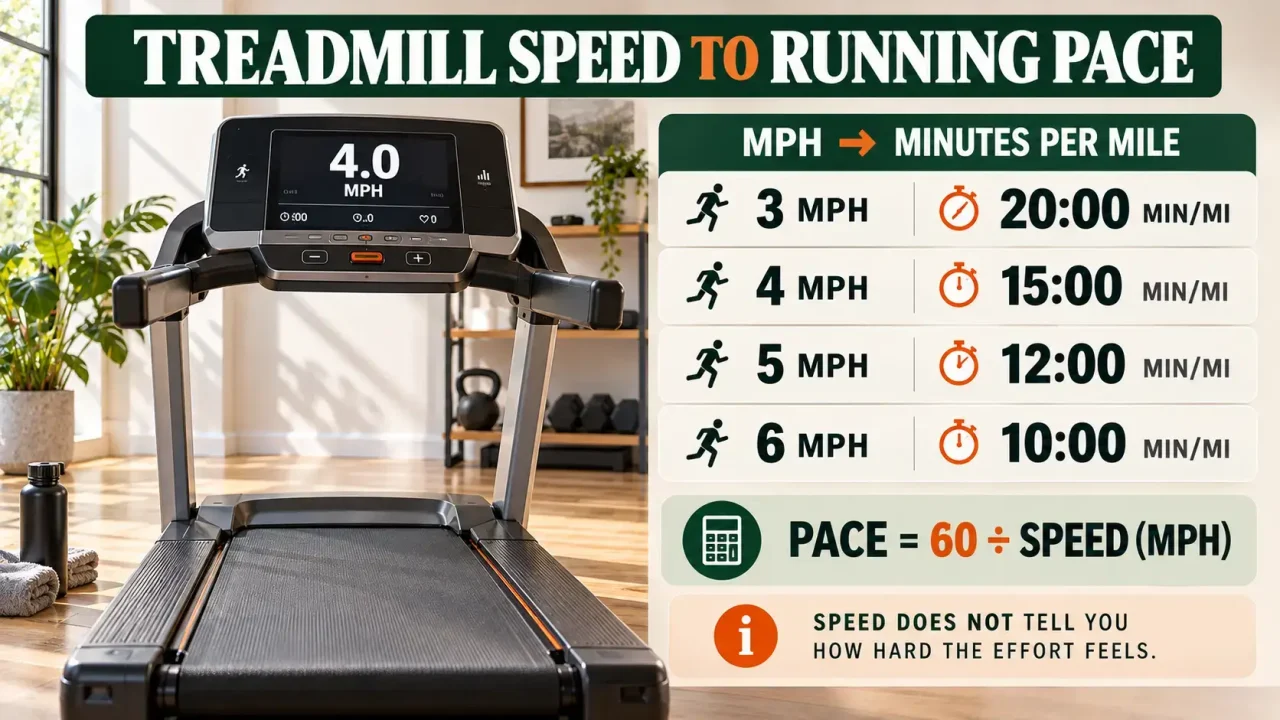
A treadmill generally displays speed in miles per hour.
To convert speed to minutes per mile, divide 60 by the treadmill speed.
For example:
3 mph equals 20 minutes per mile.
4 mph equals 15 minutes per mile.
5 mph equals 12 minutes per mile.
6 mph equals 10 minutes per mile.
These numbers describe treadmill belt speed, not how hard the effort will feel.
A particular speed may be comfortable for one runner and difficult for another.
If you're learning to run, begin with a speed that feels controlled rather than selecting a target solely from a chart.
Pace With Walking Breaks
Run-walk workouts need careful interpretation.
Suppose you alternate one minute of jogging with two minutes of walking.
Your average workout pace will include both activities unless you measure the jogging intervals separately.
This means the displayed average may be slower than your actual running pace.
Neither measurement is wrong.
They simply answer different questions.
Use total-session pace to compare similar run-walk workouts.
Use jogging-interval pace when you're specifically reviewing the running portions.
How to Know Whether You're Running Too Fast
Beginners often start at a pace that feels comfortable for the first minute but becomes difficult soon afterward.
A few signs can help you recognize this pattern.
Breathing Becomes Difficult Almost Immediately
Heavy breathing early in an intended easy workout may indicate that the pace is too demanding.
Try slowing down.
If that isn't enough, take a walking break and reassess.
However, sudden or unexplained severe breathlessness is not something to push through.
Your Pace Drops Sharply Before the Workout Ends
Starting too fast can make it difficult to maintain your intended running effort.
For example, the first few minutes may feel strong, but later sections become much slower because of fatigue.
However, hills, weather, and route changes may also affect pace.
Review the overall context rather than blaming every slowdown on poor pacing.
Recovery Takes Longer Than Expected
A workout that repeatedly leaves you unusually tired may be too demanding for your current ability.
Review your speed, duration, recent activity, and sleep.
Consider an easier session if recovery isn't going well.
Persistent or unusual fatigue requires appropriate medical attention rather than simply lowering your running speed.
Common Running Pace Mistakes Beginners Should Avoid
Why Comparing Pace With Others Can Be Misleading
A running app may show a friend completing every mile faster than you.
However, their training history, recovery, and fitness may be different.
Even runners with similar experience can have different comfortable speeds.
Instead of using someone else's performance as a standard, compare your own workouts under similar conditions.
For example, a familiar route becoming more comfortable may be meaningful progress even when your average pace stays unchanged.
How to Improve Your Running Pace Over Time
Most beginners don't need to focus on becoming faster immediately.
First, develop the ability to complete manageable running sessions regularly.
Then consider whether increasing speed matches your goals.
Build Consistency Before Chasing Speed
A realistic weekly routine gives you opportunities to practice pacing.
For some beginners, two or three manageable running sessions each week may be suitable.
However, training frequency depends on fitness, activity level, and recovery.
Choose days that fit your schedule.
Also, allow enough recovery between demanding sessions.
A consistent routine is more useful than occasional exhausting workouts followed by long breaks.
Improve Endurance at a Manageable Effort
Longer comfortable runs can help you practice maintaining effort over time.
For example, someone who can jog for five minutes may gradually work toward a longer session.
The pace doesn't need to become faster at the same time.
As endurance develops, familiar workouts may eventually feel easier.
For a structured approach, use RunWisdom's guide to building running endurance rather than turning every pace-focused workout into a distance challenge.
Add Faster Running Only When Ready
Once you can complete regular easy sessions and recover comfortably, more demanding workouts may become appropriate.
However, faster intervals and tempo sessions place additional demands on the body.
There's no universal week when every beginner should start speedwork.
If your current workouts still feel difficult, continue building a comfortable base.
A qualified running coach can help you plan more advanced sessions when necessary.
Make Small Changes and Review Them
Increasing speed slightly may feel manageable on one day but difficult on another.
Weather, sleep, stress, and recovery all affect performance.
Therefore, review several workouts before deciding whether your pace has improved.
Avoid forcing faster splits simply because your watch suggests a new personal record is possible.
Three Practical Tips for Finding a Comfortable Pace
Tip 1: Start Slower Than Your First Instinct
The opening minutes of a run can feel easier than the later sections.
Instead of accelerating immediately, begin with a relaxed effort.
After several minutes, assess your breathing and comfort.
If the pace still feels manageable, continue.
Tip 2: Check Effort Before Checking Speed
Your running watch provides useful information, but effort gives that information meaning.
For example, a 13-minute mile might feel comfortable after a good night's sleep and difficult during hot weather.
Review how you feel before reacting to a number.
A slower pace may be the appropriate choice for that workout.
Tip 3: Compare Similar Workouts Every Two Weeks
Choose a familiar route or running duration.
Record your average pace, perceived effort, and recovery.
After two weeks, compare similar sessions.
Improvement may mean that the same pace feels easier, not necessarily that every run becomes faster.
If your workload remains difficult, maintain or reduce it before attempting more speed.
How to Track Your Beginner Running Pace Progress
A simple running log can help you recognize changes over time.
For example, record the following details:
Date and distance
Total workout time
Average pace
How difficult the effort felt
Walking breaks, if any
Recovery before the next session
You don't need to record every possible fitness metric.
Choose information that helps you understand your workouts.
When Should You Change Your Target Pace?
Consider an adjustment after several comparable sessions feel consistently manageable.
Recovery should also be comfortable.
If familiar workouts remain difficult, maintain your current pace or reduce the effort.
When progress appears, avoid increasing speed and running distance sharply at the same time.
The next change should fit your goals, health, and current fitness.
When to Stop Running or Seek Medical Advice
Running can feel demanding when you're beginning an unfamiliar activity.
However, significant pain or unusual symptoms shouldn't be treated as normal training discomfort.
Stop exercising if sharp pain, worsening discomfort, or symptoms that change your movement occur.
Chest pain, fainting, or severe unexplained breathing difficulty during exercise requires urgent medical attention.
Persistent unusual fatigue or breathlessness also deserves medical assessment.
If you're returning after an injury or illness, individualized guidance may be necessary.
A suitable running pace should support exercise at an appropriate effort, not encourage you to ignore warning signs.
FAQs
Is a 12-minute mile good for a beginner?
A 12-minute mile may be a suitable pace for some beginners, but it can be too demanding for others. Consider whether the speed matches your intended workout and allows manageable breathing and recovery. There's no requirement to run a 12-minute mile to be a successful beginner.
Is a 15-minute mile too slow for running?
No. A 15-minute mile isn't automatically too slow. Some new runners find that speed comfortable, while others need a slower pace or walking breaks. What matters most is whether the effort fits your current fitness and training goal.
What is a good jogging pace for beginners?
A good jogging pace is one you can maintain at a controlled effort during the intended session. Some beginners jog around 12–15 minutes per mile, while others move more slowly. Use breathing, perceived effort, and recovery to judge suitability rather than depending on a fixed number.
Should beginner runners focus on pace or distance?
Beginners generally benefit from learning to maintain comfortable effort and building a manageable routine before chasing speed or distance targets. Running time can also be useful because it helps track activity without requiring a certain mileage. The best focus depends on your current fitness and goal.
How can I tell if my running pace is too fast?
If breathing becomes very difficult early in an intended easy run, your pace may be too demanding. Other signs include unusually rapid fatigue or difficulty finishing familiar sessions. Slow down or take walking breaks, and seek medical advice for concerning or unexplained symptoms.
How long does it take to improve running pace?
There is no universal timeline. Some beginners notice that familiar workouts feel easier after several weeks of consistent activity. However, improvements in speed depend on previous fitness, training, recovery, and health. Compare similar sessions over time rather than expecting a specific pace by a fixed deadline.
Conclusion
A good beginner running pace isn't determined by one number on a watch. A comfortable speed, controlled breathing, realistic workouts, and appropriate recovery are more useful starting points than comparing your mile times with experienced runners. Whether your current pace is 12, 15, or 18 minutes per mile, the goal is to understand how the effort feels and whether it supports your training. Over time, familiar sessions may become easier, and faster running may follow as your fitness improves.
At RunWisdom, we focus on practical running advice informed by reliable exercise and health information. During your next two weeks of running, choose a manageable pace and record how your workouts feel. Compare your effort, average pace, and recovery across similar sessions. Instead of rushing to reach someone else's speed, work toward a running routine that suits your fitness and gives you room to improve.
Medical disclaimer: This article provides general fitness education and does not replace individualized medical advice. People with injuries, health conditions, or unusual exercise-related symptoms may need professional guidance.